🔻 Watch the video below.
🔻

The Heart of the Underground: Inside Wekfest New Jersey 2026’s Automotive Masterpieces
For over a decade, Wekfest has been more than just a car show; it’s the beating heart of the underground tuning scene. From its humble beginnings in 2008, this premier automotive exposition has evolved into a global pilgrimage for JDM and import enthusiasts. The New Jersey installment in 2026 continued this legendary trajectory, drawing a crowd not just of spectators, but of dedicated craftspeople, passionate engineers, and relentless innovators. As an industry veteran with ten years immersed in this world, I can tell you: Wekfest is where passion transforms metal into legend.
This year’s Wekfest New Jersey witnessed a seismic shift in the landscape. Honda, a brand synonymous with reliability and performance, didn’t just participate; it dominated. For every Toyota, Nissan, or Porsche on the floor, there were a dozen Hondas—each a testament to the endless potential unlocked by the “tuning bug.” For those of us who have spent years analyzing aftermarket car tuning, performance upgrades, and the latest in automotive modification, this show was a masterclass.
The Lone Apex Predator: Marby Enriquez’s NSX Transformation
No discussion of Wekfest New Jersey 2026 would be complete without acknowledging the undisputed king of the show: Marby Enriquez’s 1992 Acura NSX. This isn’t just a car; it’s a story of evolution. Enriquez has meticulously transformed this legend into a weaponized precision instrument, a masterclass in track-ready automotive design.
Having owned this NSX since 2014, Enriquez has taken the legendary mid-engine layout and weaponized it. Gone is the pristine factory feel; in its place, a striking Billet Turbo Systems blue wrap covers a highly modified skeleton. The heart of this beast remains the iconic 3.0L C30A V6, but it’s been pushed well beyond its stock limits. A Comptech Whipple supercharger provides the forced induction, fed by a high-performance Walbro 255 fuel pump. Inspired by the rare, race-bred NSX-R GT, a bespoke snorkel intake channels cool, dense air directly to the motor.
Performance by the Numbers
Visually, the car is a work of art. A carbon-fiber hood featuring a functional scoop immediately draws the eye, serving a critical purpose in this high-performance build. But performance is more than just looks; it’s about the data. At the rollers, the NSX clocked in at a staggering 380 hp and 270 lb-ft of torque, all routed to the wheels.
To handle this newfound power, the chassis has been equally upgraded. KW Clubsport coil-overs provide razor-sharp handling and ride height adjustment, while Volk Racing TE37 wheels—the icon of lightweight racing wheels—are wrapped in aggressive Toyo Proxes R888R tires. Braking is handled by a robust StopTech system with Hawk pads, ensuring the car can stop as fast as it goes. A Voltex Type 4/5 GT wing is not just for show; it provides the high-speed downforce necessary to keep this machine planted on the tarmac.

Enriquez’s NSX serves as a beacon for what’s possible when automotive engineering, precision automotive craftsmanship, and sheer willpower combine. Even post-2020 modifications—including white wheels and a subtler front splitter—haven’t diminished its impact. This car is a living, breathing embodiment of the Honda tuning scene.
The Unexpected Icon: The Honda N-BOX
Wekfest New Jersey 2026 wasn’t just about hypercars; it was about diversity and the surprising creativity of the JDM world. Enter the Honda N-BOX. For the uninitiated, this is one of the many kei cars produced by Honda. These Japanese domestic market micro-vehicles are designed to meet strict, Japanese government-mandated size and engine regulations. Even the largest of these Japanese micro-vans typically top out under 1,400 lbs with displacement capped at roughly 660cc.
This particular N-BOX has transformed a utilitarian minivan into a character-filled masterpiece. Finished in the sportier “Custom” trim, it boasts an assertive front fascia and a boxy silhouette reminiscent of Honda’s iconic Element. However, the real surprise lies under the hood. The license plate, famously reading “K24 NA,” hints at a massive swap. While it remains unknown if the owner truly managed to shoehorn a K24 2.4-liter inline-four—nearly four times the size of the stock engine—into this tiny frame, the build remains a stunning example of kei car tuning and cultural crossover in automotive modification.
Vehicles like this N-BOX underscore the fundamental philosophy of Wekfest: pushing boundaries and celebrating the unexpected. Beside the kei car, we saw a slammed Element with a vibrant blue interior and a pair of modified Acura MDXs, which are rare sights on any show floor. This diversity is what makes Wekfest USA 2025 (and now 2026) a must-attend event for anyone interested in aftermarket Honda performance and Japanese domestic market automotive design.
The Auto Salon Contender: Precision in the S2000
In a show saturated with modified Hondas, one S2000 stood head and shoulders above the rest in terms of precision and purpose. This Honda S2000 build is a symphony of JDM tuning, where every component is chosen for both form and function.
Under the hood, its F22C1 engine has been enhanced with a curated selection of high-end components from legendary brands. A Mugen valve cover hints at the performance lurking beneath, complemented by parts from ASM and HKS. The engine bay itself is a work of art, showcasing the clean lines of a true performance Honda build.
The meticulous approach extends to the exterior and interior as well. The car sits on Advan wheels, providing a perfect balance of grip and aesthetics. Braking is handled by a reliable Renegade system, further emphasized by a Voltex rear wing and an ASM steering wheel that commands attention from every angle. Among the sea of modified S2000s at Wekfest, this example stands out as the most complete and cohesive build. It possesses a level of refinement that wouldn’t look out of place at a Tokyo Auto Salon or Formula Drift event.

A Celebration of Japanese Automotive Heritage
Wekfest New Jersey 2026 wasn’t just about the cars; it was a celebration of the entire automotive ecosystem. Scale models of iconic cars sat proudly in front of their full-size counterparts, while a liveried Motocompacto electric scooter was parked next to a sixth-generation Honda Civic. This sixth-gen, remarkably, featured an original 1960s Honda emblem on its rear—the same wide-top “H” design that inspired the brand’s new 0 Series EV logo. This connection between the past and future perfectly encapsulates the spirit of Honda engineering.
The Unlikely Hybrid: Civic Hatchback with a Prelude Heart
Among all the wild turbo builds, supercharged conversions, and glowing LEDs, one humble silver Civic stood out not for its looks, but for what resided beneath its hood. It was the only H-series engine we saw at the entire show. The H-series engine, often overshadowed by the legendary B-series, was Honda’s torquey workhorse that powered cars like the Prelude Type S and Accord Euro R. Seeing one swapped into a modest EG generation Civic hatchback was rare and refreshing.
The owner of this Civic has had the car for over two decades, and the H22 motor has resided within it for almost the same amount of time. This build isn’t trying to be flashy; it’s pure function. It’s a testament to Honda reliability and the willingness of enthusiasts to preserve and enhance these iconic powertrains. This approach is a cornerstone of automotive customization and a significant part of the Honda performance upgrades market.
The Unicorn: The Mugen RR
And finally, the crown jewel of the show. Positioned near the far end of the Wekfest floor was a pristine FD2 Civic Type R in Championship White. But beside it sat something even rarer: the Mugen RR.
Regarded as the ultimate Type R, all 300 Mugen RR units sold out within roughly 10 minutes, with 299 remaining in Japan and a single car exported to Malaysia. This example, later imported to the U.S., features Mugen camshafts, ECU tuning, and an upgraded exhaust, bringing output to 237 hp. Carbon-fiber bumpers, an aluminum hood, and the signature 18-inch Mugen wheels reduce weight and sharpen performance across the board.
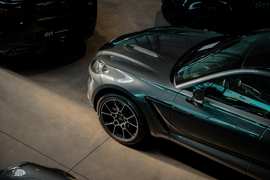
The Mugen RR is a true masterpiece, embodying Honda’s engineering passion. Positioned next to the FD2, it becomes clear: While the FD2 may captivate with aesthetics, the Mugen RR represents the essence of Mugen’s performance philosophy. It stands as a monument to Japanese performance engineering and the pinnacle of modified