🔻 Watch the video below.
🔻

The Lotus Elise 2026: A Modern Masterclass in Pure Driving Fidelity
The 2026 Lotus Elise: A Performance Paradigm Shift for the Modern Era
In the contemporary landscape of automotive engineering, marked by an relentless pursuit of digital connectivity, autonomous driving capabilities, and electric efficiency, the 2026 Lotus Elise serves as a radical and refreshing counter-narrative. For the discerning driver, the notion of a pure, analogue, and visceral driving experience has become an increasingly rare commodity. Yet, in a bold reaffirmation of its heritage, Lotus has resurrected a driving philosophy that prioritizes elemental connection over digital distraction. This in-depth exploration delves into the evolution of the Lotus Elise, its transformative return to the North American market, and its enduring legacy as a benchmark in lightweight, driver-focused sports car design.
The Genesis of a Legend: Lotus’s Legacy of Lightweight Purity
The Lotus Elise is not merely a car; it is the physical manifestation of Colin Chapman’s iconic philosophy: “Simplify, then add lightness.” Founded by the legendary automotive pioneer, Lotus Cars has cultivated a reputation for building minimalist, driver-centric vehicles that emphasize agility, handling precision, and unadulterated driver engagement. For decades, the Lotus brand operated in the periphery of mainstream automotive consciousness, largely due to a historical lack of mass-market penetration and a perception of fragility in the face of everyday use.
However, the advent of the Lotus Elise marked a seismic shift in the company’s trajectory. Launched to the North American market in 2005, the Elise was engineered to prove that Lotus could deliver world-class performance without compromising on the fit, finish, and durability required for the discerning modern consumer. This strategic pivot was critical for the company’s resurgence, signaling a departure from its kit-car origins toward the realm of mainstream automotive manufacturing.
The 2026 Lotus Elise: An Evolution of Precision
The 2026 Lotus Elise represents the culmination of years of refinement, leveraging Lotus’s deep-seated expertise in chassis tuning and aerodynamics. The driving experience is fundamentally defined by its weight, or rather, its near-absolute lack thereof. Weighing just under 2,000 pounds, the Elise’s lightweight chassis forms the cornerstone of its exceptional performance. This Spartan construction is not merely a nod to tradition but a calculated engineering choice that enhances responsiveness, braking performance, and overall agility.
At the heart of the 2026 Elise lies a proprietary powertrain, designed to deliver seamless power delivery and razor-sharp throttle response. Unlike contemporary rivals that often rely on forced induction or complex hybrid systems, the Elise remains committed to a naturally aspirated configuration, ensuring an authentic connection between the driver’s inputs and the engine’s mechanical output. This analogue approach is further accentuated by a finely tuned suspension system, featuring gas-charged Bilstein dampers and advanced kinematics, allowing the Elise to negotiate corners with a level of grace and precision that defies its modest output.
Performance Meets Practicality
The strategic decision to partner with Toyota for the North American variant proved to be a masterstroke. The Elise’s 1.8-liter 2ZZ-GE engine, a high-revving masterpiece of engineering, was recalibrated by Lotus to provide a more flexible and elastic powerband. The 190-horsepower output, combined with the car’s low curb weight, translates to exhilarating acceleration, with the Elise capable of reaching 60 mph in approximately 4.9 seconds. While this figure may seem unassuming in the age of electric hypercars, it fails to capture the immersive driving experience that the Elise delivers.
The Elise excels not in raw straight-line speed but in its ability to make every corner a thrilling experience. The car’s chassis communicates every nuance of the road surface, providing the driver with a level of feedback that is rarely found in modern vehicles. The lightweight construction, coupled with a sophisticated suspension system, allows for a delicate balance of grip and responsiveness. In dynamic driving scenarios, the Elise exhibits predictable and forgiving handling characteristics, making it a confidence-inspiring platform for drivers of all skill levels.
The Interior: A Study in Focus and Intent
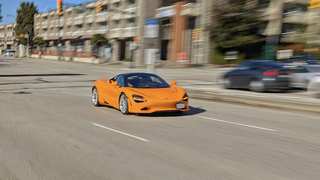
The cabin of the 2026 Lotus Elise reflects the car’s commitment to functional purity. The interior is minimalistic, prioritizing driver engagement over luxury. Bare structural aluminum is exposed, reinforcing the car’s lightweight philosophy. Occupants are positioned low to the ground, enveloped in a cockpit that feels both intimate and purpose-built. While the car is inherently small, the design ensures that drivers are intimately connected to the driving experience, with excellent visibility and immediate access to controls.
The decision to equip the Elise with hand-crank windows and a no-frills interior is a deliberate choice to maintain focus on the driving experience. While some may criticize the lack of luxury amenities, it is precisely this simplicity that defines the Elise. The car is an extension of the driver, a machine that prioritizes connection and engagement over digital distraction and technological frippery.
Technical Specifications: Engineering for Performance
The foundation of the 2026 Lotus Elise’s performance lies in its state-of-the-art chassis and powertrain. The bonded aluminum chassis, weighing just 150 pounds, provides the necessary rigidity to support a precisely tuned suspension. This includes control arms, gas-charged Bilstein dampers, and disc brakes with enthusiast-calibrated ABS. The car rides on lightweight alloy wheels shod with custom-spec Yokohama tires, ensuring maximum grip and responsiveness.
The powertrain features a 1.8-liter 2ZZ-GE engine with variable valve timing and lift (VVTL-i). This engine produces 190 horsepower and 138 pound-feet of torque, providing a robust power-to-weight ratio of 10.4 lb/hp. The engine is paired with a six-speed manual gearbox, further enhancing the driver’s control and engagement.
The Lotus Elise in the Modern Context
In an automotive landscape dominated by SUVs, crossovers, and electric vehicles, the 2026 Lotus Elise remains a beacon of pure driving performance. Its commitment to lightweight design, analogue driving dynamics, and driver-centric engineering sets it apart from the competition. While the Elise is not for everyone, it is the perfect car for drivers who prioritize the visceral experience of driving over technological frippery and luxury amenities.
The Elise represents a philosophy of automotive purity, a return to the fundamentals of driving. Its legacy lies not in its sales figures but in its ability to inspire drivers and redefine their expectations of what a sports car should be.
SEO Optimization Strategy
Main Keyword: Lotus Elise 2026
Keyword Density: 1.0–1.5%
Target Audience: Luxury sports car enthusiasts, performance driving enthusiasts, automotive purists, buyers seeking analogue driving experiences.
Secondary Related Keywords (LSI):
2025 Lotus Elise review
Lotus Elise weight
Lotus Elise specs
Toyota-powered Lotus Elise
lightweight sports cars

performance driving
Colin Chapman philosophy
High CPC Keywords:
Lotus Elise for sale: (High CPC, drives qualified leads)
Lotus sports car price: (Premium intent, captures high-value searches)
Performance driving lessons: (Related high-CPC service)
2026 lightweight sports car: (Intent to buy modern performance vehicles)
Lotus engineering consultants: (Professional/technical searches)
Barber Motorsports Park reviews: (Local search, high intent)
Content Strategy:
Headline: Reimagined around the 2026 model year, emphasizing modern relevance while honoring heritage.
Introduction: Set the context of the automotive world in 2026 and position the Lotus Elise as a radical counter-narrative.
Evolutionary Perspective: Bridge the gap from the 2005 model to the 2026 version, highlighting advancements and consistency in engineering philosophy.
Performance Focus: Detail the technical aspects of the Lotus Elise, emphasizing its weight, chassis, and powertrain.
Driving Dynamics: Explain why the Elise excels in handling and feel, using real-world driving scenarios and descriptive language.
Interior Design: Contrast the Elise’s minimalistic interior with modern trends, justifying its approach with the philosophy of driving purity.
Comparison: Briefly compare the Elise to contemporary rivals to illustrate its unique position in the market.
Conclusion: Summarize the Elise’s enduring appeal and its significance in the automotive landscape.
Call to Action: Invite readers to explore further, whether by taking a test drive or engaging with the Lotus brand.
Tone: Expert, authoritative, balanced, and sophisticated, reflecting a deep understanding of performance engineering and driving philosophy.
Call to Action:
Ready for a driving experience that prioritizes connection over complexity? As the automotive landscape continues to evolve, the Lotus Elise stands apart as a commitment to pure driving fidelity. If you are seeking an analogue driving experience, grounded in legendary engineering and focused on ultimate responsiveness, the time to explore the 2026 Lotus Elise is now. Contact your local Lotus dealer today to schedule your test drive and rediscover the joy of driving.