🔻 Watch the video below.
🔻

The 2026 Lotus Elise: A Masterclass in Lightweight Performance and Modernized Refinement
For the U.S. automotive landscape of 2026, the Lotus Elise is more than just a car; it’s a statement. A definitive rejection of the mass-produced luxury and electronic complexity that dominate today’s showrooms, the Elise is an unapologetically raw, featherweight sports car that traces its lineage directly to the legendary founder of Lotus, Colin Chapman. This isn’t a retro revival; it is a bold redefinition of the modern sports car, built upon a philosophy that engineering simplicity does not equate to compromise, but rather, to sublime driving purity. As the automotive world moves inexorably toward electrification and automation, Lotus stands firm, offering a pure, visceral experience that is increasingly rare.
This article delves deep into the resurgence of the Lotus Elise in the American market. We will explore its heritage, the technological advancements that have brought it to 2026 with enhanced performance and durability, and its critical role as the spearhead for Lotus’s ambitious brand revival in the United States. From its revolutionary bonded-aluminum chassis to its bespoke, high-revving Toyota powertrain, the Elise is designed to deliver an exhilarating connection between driver and machine that competitors struggle to replicate.
Lotus: A Heritage of Lightweight Engineering Excellence
The story of Lotus is inextricably linked to its visionary founder, Colin Chapman. From the company’s inception in the early 1950s, Chapman was a purist. His mantra, “Simplify, then add lightness,” was not merely a slogan; it was the fundamental law governing every vehicle to leave the Hethel, England factory. Chapman understood that the shortest path to increased speed and agility lay not in brute power, but in the physics of inertia. By stripping away excess weight and reducing the load on the engine, tires, and suspension, Lotus cars could achieve performance levels that defied their engine specifications.
Throughout the 1960s and 1970s, this philosophy yielded automotive icons like the Lotus 7, Europa, and Elan. These vehicles were praised for their race-car-like handling, precise steering, and nimble agility. However, this focus on purity often came at the expense of build quality, refinement, and long-term durability. The phrase “kit-car attitude” became associated with the brand, reflecting a perception that Lotus cars required a certain degree of understanding and manual dexterity from the owner to maintain.
By the late 20th century, Lotus faced a critical juncture. The automotive market had evolved. Consumers no longer accepted flimsy interiors or temperamental engineering. The era of the digital dashboard, robust build quality, and manufacturer-backed reliability was in full swing. Brands like Porsche and Ferrari had successfully transitioned from boutique manufacturers to global luxury powerhouses. Lotus, meanwhile, had become an almost invisible player in the U.S. market, with its flagship Esprit model offering outdated technology and diminishing sales.
The launch of the 2005 Lotus Elise was designed to fundamentally change this perception. But as it re-entered the American market after decades of intermittent presence, there was considerable apprehension. Could Lotus, a brand defined by its delicate handling and racing lineage, meet the expectations of a new generation of drivers accustomed to European luxury standards? The company was effectively relaunching its brand in the United States, and the Elise bore the immense weight of this responsibility.
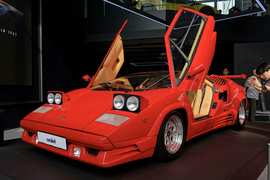
The answer, as first reported by industry experts and eagerly embraced by driving enthusiasts, was a resounding yes. The 2005 Lotus Elise, with its sub-2,000-pound curb weight and cutting-edge engineering, was a quantum leap forward for the company. It successfully integrated Lotus’s signature agility with modern production standards, proving that simplicity and quality were not mutually exclusive.
The Modernized Lotus Elise: Under a Ton, Overdelivering
In 2026, the Lotus Elise continues this mission with even greater conviction. The core philosophy remains unchanged: absolute driving engagement. But the execution has been refined to meet the demands of the 21st-century driver.
One of the most striking aspects of the Elise is its chassis architecture. It utilizes a bonded aluminum tub structure, an advanced manufacturing technique that produces an incredibly stiff yet lightweight platform. This aluminum chassis weighs a mere 150 pounds, yet it provides the rigidity necessary for the suspension to perform exactly as its engineers intended. For an open-top roadster, achieving torsional stiffness is notoriously difficult, but the Elise’s platform is exceptionally solid, creating a tactile connection to the road that few cars can match.
The suspension itself is a masterpiece of minimalist engineering. It features double wishbones at all four corners, lightweight gas-charged Bilstein dampers, and brakes with enthusiast-calibrated ABS. Light, modest-sized alloy wheels are wrapped in custom-spec Yokohama tires—Yokohama, a brand synonymous with high-performance grip, provides the tire supplier for Lotus in the U.S. for this model. This combination ensures the car responds instantly to driver inputs while providing confidence-inspiring stability during spirited driving.
While the chassis prioritizes light weight and rigidity, the bodywork strikes a balance between form and function. The Elise is undoubtedly a small car; occupants will find themselves close together, and the cargo space is limited. However, these are deliberate design compromises. The minimalist trimming, often featuring exposed structural aluminum, is not a result of cost-cutting but a conscious choice to keep the overall mass down. Yet, the quality of materials, the precision of the assembly, and the long-term reliability of the Elise have all been significantly improved since the early 2000s. The fit and finish are world-class, with no sloppy noises or sensations to distract the driver. The car feels coherent and cohesive—a modern production automobile designed for the discerning buyer.
Toyota Power, Lotus Personality
The heartbeat of the Lotus Elise is its powertrain, which has long been a subject of debate and fascination among enthusiasts. The 2005 U.S.-spec Elise famously adopted the Toyota 1.8-liter 2ZZ-GE engine, previously used in the Celica GT-S and Matrix XRS. This engine featured Yamaha-designed variable valve timing and lift (VVTL-i), a system that delivers a Jekyll-and-Hyde performance characteristic: calm and economical at low revs, and ferocious at high revs.
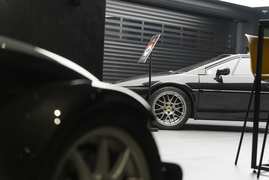
However, Lotus did more than just transplant a standard engine into its chassis. The engineers at Hethel completely reprogrammed the engine control unit (ECU) and made significant modifications to the intake and exhaust systems. This allows the 1.8-liter engine to feel smoother and more linear in the Lotus application than it does in its native Toyota form.
In 2026, the 2ZZ-GE remains the backbone of the Elise, but with further optimizations. While the factory estimates a output of 190 horsepower and 138 pound-feet of torque, actual power figures often exceed expectations due to the car’s low curb weight. This power-to-weight ratio is arguably the most critical metric for a sports car, and the Elise excels here. With a power-to-weight ratio that typically falls around 10.4 pounds per horsepower, the Elise doesn’t need enormous power figures to achieve blistering performance.
The engineering team carefully calibrated the engine response to encourage active driving. The Toyota VVTL-i system is tuned to become seamlessly active at higher RPMs, pulling strongly without the abruptness often associated with VVT systems. This predictability allows drivers to utilize the engine’s torque not just for acceleration, but for cornering attitude, providing lively options to manage both the front and rear of the car.
Handling That Resets Expectations
The driving experience of the Lotus Elise is where its legendary engineering truly shines. The cockpit is a businesslike environment—functional, light, and driver-focused. Drivers sit low to the ground, positioned centrally behind the front axle, with very little mass between them and the road. The large windshield and rear roof hoop provide protection, and while visibility is excellent in most directions, the rear is naturally limited by the engine cover. The iconic Elise cockpit is designed to center the driver, preparing them for an immediate and tactile driving experience.
Starting the engine delivers a crisp, eager blat that speaks to the car’s sporting intentions. The seating position, nestled low in the minimalist bucket seats, immediately cues the driver that they are in for a special experience. The clutch and six-speed manual gearbox are light and precise, with short, positive throws. Unlike some performance cars that demand physical exertion, the Elise makes shifting effortless, allowing the driver to focus on the path ahead.
The magic of the Elise reveals itself immediately at low speeds. The fast-ratio steering provides an immediate, connected feel. Because of the car’s minimal mass, the steering is incredibly light yet brimming with feedback. And a car weighing under a ton doesn’t need excessive power or complex electronic assists to feel fast. The Elise’s 190 horsepower and 138 pound-feet of torque may not sound impressive on paper compared to modern muscle cars, but combined with its 2,000-pound curb weight, the acceleration is brisk and visceral.
At the track, the Elise’s chassis engineering is fully showcased. Whether navigating long, smooth arcs or tight, technical chicanes, the car feels beautifully balanced. On a trailing throttle, the Elise exhibits neutral handling, with grip evenly distributed between the front and rear tires. Applying power mid-corner induces gentle understeer, naturally pointing the nose wide as the front tires lighten their load. Lifting off the accelerator causes the tail to ease around, tightening the turn. And with deliberate throttle control, the Elise can execute dramatic, grin-inducing slides that make even average drivers feel like professionals