🔻 Watch the video below.
🔻
The 2005 Lotus Elise: A Lightweight Legend Arrives in America
It’s the car that sent shockwaves through the automotive world when it officially landed on U.S. soil in 2005. The Lotus Elise arrived as a pure, unadulterated driving machine—a return to Colin Chapman’s philosophy of “adding lightness” in an era increasingly dominated by heavy, tech-laden GT cars. This article takes a deep dive into the 2005 Lotus Elise, exploring its history, engineering, performance, and lasting legacy.
A Return to Form for Lotus
The story of the 2005 Lotus Elise is not just about a new car; it’s about the revival of a brand in the American market. For years, Lotus had been a niche player in the U.S., primarily known for its Esprit models that were starting to feel dated against competition from Porsche and Ferrari. The Elise represented a bold new direction—a high-volume sports car designed to be affordable, nimble, and above all, fun to drive.
The decision to bring the Elise to the United States was a strategic one. Lotus needed a car that could compete with the Mazda Miata, the Toyota MR2, and entry-level Porsche models, but it had to do so on its own terms. The Elise was not meant to be a car for everyone. It was designed for drivers who valued connection over luxury, agility over horsepower, and purity over performance.
The Hethel-based company, founded by the visionary Colin Chapman in the early 1950s, had always been synonymous with innovation and lightweight engineering. However, Lotus had also struggled with reliability, durability, and quality. The driving experience often required a certain “kit-car” attitude toward fit and finish, and owner maintenance could be a challenge. But in the new millennium, automotive consumers expected more than just a thrilling drive. They expected a car to be trouble-free, reliable, and capable of daily use.
Lotus recognized this shift in expectations. They knew that the Elise had to deliver on all fronts. It had to be light, fast, and nimble, but it also had to be well-built, reliable, and easy to live with. They knew that any compromise on quality would be fatal to the brand’s relaunch in the U.S.
Under the Ton: A Philosophy in Action
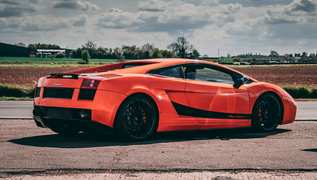
One glance at the specification sheet makes it clear that the Elise upholds Lotus tradition in terms of driveability and performance. It’s a simple, mid-engine roadster weighing just 1,975 pounds. Power comes from a 190-horsepower Toyota engine, mated to a six-speed gearbox. The chassis tuning is performed by the same ride and handling wizards whose talents Lotus sells to the world through its consultancy arm.
The Elise has been a commercial success in Europe for several years, but those models used a coarse and uninspiring Rover engine. The Toyota-powered U.S. version was a significant improvement, offering more refinement and a wider range of capabilities. However, the real question was whether Lotus tradition would also live on in the car’s perceived quality and propensity to shed bits.
The early indications were promising. The Elise is small—beefy occupants will rub elbows, and everyone has to travel light—and simply trimmed, with lots of bare structural aluminum showing. But these are necessary and reasonable compromises to make a car that’s light and supremely maneuverable. The quality of materials, the accuracy of assembly, and the likely reliability appear not at all compromised. Fit and finish are well within the game; there are no sloppy noises or sensations, and the car looks and feels stuck together in the manner we now expect of modern cars built by modern manufacturers.
The Elise begins with a sophisticated platform chassis of bonded aluminum sheets and extrusions. This structure weighs a mere 150 pounds, Lotus says, but it imparts a sense of rigidity (difficult in an open car) and provides the stiffness necessary to let a precisely tuned suspension perform as its engineers intended. This rigid foundation carries a control-arm suspension with gas-charged Bilstein dampers, disc brakes with enthusiast-calibrated ABS, and light, modest-sized alloy wheels and custom-spec Yokohama tires.
Toyota Power, Lotus Personality
The powertrain nestled behind the cockpit is Toyota’s 1.8-liter 2ZZ-GE engine and six-speed gearbox, the same setup used in the front-wheel-drive Celica GT-S and Matrix XRS. This long-stroke engine utilizes variable valve timing and lift (VVTL-i) to deliver flexible midrange power plus a mad top-end rush. However, it feels vastly different, and much better, in the Lotus application than it does in any Toyota vehicle we’ve tested.
You don’t have to drive it like you’re angry with it, and it doesn’t buzz and shriek back at you. In Toyotas, we usually feel we have to rev this engine hard and just put up with its intensity. The VVTL-i has always made a dramatic changeover to the high-speed cam profile at about 6400 rpm. It gets the job done, but doesn’t feel as silky and happy as it might.
Lotus has transformed the 1.8-liter engine into a much smoother, more elastic powerplant, and not just by bolting it into a vastly lighter, less burdensome vehicle. A new engine-control computer programmed by Lotus significantly changes the character of the engine. Notably, the crossover from low-speed to high-speed valve events happens a couple hundred rpm sooner and feels much more seamless. It doesn’t fall off the cam on upshifts, which enhances the engine’s ability to provide ready torque and willing response whenever the driver asks.

And that gets to the real point of the Elise. The Lotus development team said they were after a Formula Ford car for the road—in the way it would take your input, react and communicate, forgive mistakes but not hide them, help you learn to drive better, and make sure you enjoy the lessons along the way. And they nailed it.
Handling That Resets Your Expectations
Drop into the pleasingly stark cockpit (which you can do open-wheeler-style if you’re feeling jaunty, stepping over the door, standing on the seat, then wriggling down under the wheel), and you find yourself in a businesslike driving environment. You sit low to the ground, with very little car around you, though you’re well-protected by the large windshield and the rear roof hoop (with fixed glass). Visibility is fine in all directions except to the rear quarters, and the upright, one-piece bucket seat, which magically accommodates a wide range of physiques, presents you to the smallish steering wheel in a way that immediately anticipates good things to come.
The engine fires to an eager but not too raspy blat, and as you orient on the pedals and snick the shifter into first, you notice two key points: First, spacing of the pedals isn’t overly cramped, but you’ll still do better with skinny loafers than with wide-soled running shoes; and second, the slop-free linkage and light gate return springs Lotus has selected make this six-speed a friendlier gearbox than it’s ever been before.
It doesn’t take much beyond a brisk walking pace to appreciate how the Elise harnesses the magic of light weight. The delicate immediacy of fast-ratio, pure-manual steering, with little mass bearing down on smallish tire contact patches, is a delight to feel and to use. And a car weighing under a ton doesn’t need a lot of technical frippery to help it change heading on a whim. Finally, 190 horsepower and 138 pound-feet may not sound like the stuff of speed-lust, but with only 1,975 pounds of car to resist its will, that output can flat motivate. Lotus quotes a 0-to-60 time of 4.9 seconds, though that only hints at the real beauty of the Elise’s power-to-weight ratio. Throttle is available to do more than just speed up and slow down. It also can be used to affect cornering attitude, giving the driver lively options to manage both ends of the car. Sweet.
An autocross course provides a safe and focused opportunity to examine the Elise’s moves, and Lotus set one up in a Barber parking area. The most telling sections were the long, smooth arcs at each end, where we could experiment with cornering attitude, and where the Elise proved marvelously cooperative. On neutral throttle, it hooks around dead neutral, slip angles and grip evenly balanced between front and rear tires. Roll into some throttle and gentle understeer points you a bit wide, as the front tires unweight. Hop out of the gas and some lift-throttle oversteer eases the tail around and tightens your heading. Get back on the power with authority, and you can carry a lurid tail-out slide like you’re a natural-born drifter. The Elise makes it easy.
Out on the road, where you’ll hit trees instead of orange cones, you may not hang it out quite so casually. But the Elise is the same eager dance partner. It’s flexible and hassle-free in traffic (though you do feel small), and any time the mood and opportunity strike, the car is ready to have a go. Freeway onramps become mood-altering experiences, just because of how the car flicks into a cornering stance and accelerates hard, grinning back at you all the while. On winding secondary roads, the Elise will flow as gracefully as you like or dive-bomb apexes like a shifter kart. You call the tune.

Elemental Transportation with a Premium