🔻 Watch the video below.
🔻

The 2005 Lotus Elise: A 1,975-Pound Wake-Up Call for the Modern Driver
By Jordan Rittenhouse
As seen in the July 2004 issue
Introduction: A Brand’s Second Chance
In the automotive landscape of the mid-2000s, the Lotus brand was synonymous with lightweight engineering, razor-sharp handling, and a history of racing pedigree. However, for many enthusiasts in the United States, Lotus had become almost invisible. Decades of declining sales for the aging Esprit had left the marque struggling to connect with modern buyers. The brand was at a critical juncture, and everything hinged on the 2005 Lotus Elise.
This wasn’t just another new sports car; it was a relaunch of the entire Lotus brand in America. With a starting price around $40,000, the Elise represented a bold statement: a return to Colin Chapman’s core philosophy of “simplify, then add lightness,” adapted for the 21st century. But after years of Lotus cars demanding a certain level of mechanical sympathy and a tolerance for “kit-car” fit and finish, there were serious questions about whether the Elise could meet the expectations of a new generation of car buyers. Consumers today expect reliability, precision, and quality that doesn’t require constant attention. Would the 2005 Lotus Elise live up to its legendary heritage without demanding a sacrifice from its owner?
The truth is, the automotive world was ready for something raw, unfiltered, and honest. The 2005 Lotus Elise answered that call, but it did so with a level of refinement and mechanical sophistication that few expected from a brand that often celebrated minimalism.
Engineering Purity: The Lightweight Foundation
At first glance, the 2005 Lotus Elise embodies the spirit of a track-ready race car translated to the road. The specifications are sparse, focused entirely on the essentials. The car weighs a mere 1,975 pounds, powered by a 190-horsepower Toyota engine and paired with a six-speed manual gearbox. What’s more, the chassis tuning was handled by the same engineering wizards responsible for some of the world’s most revered sports cars.
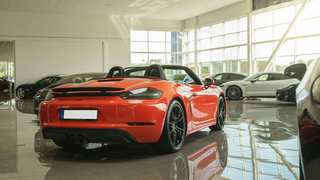
Before the Elise, Lotus relied on its aging, uninspiring Rover engines. The switch to Toyota was a significant shift for the company. The European Elise had long been a delight to drive thanks to its lightness and handling, but the coarse nature of the Rover powertrain was a consistent drawback. The U.S.-spec car promised a much more refined driving experience, thanks to Toyota’s modern VVT-i engine technology.
But the real question wasn’t about the powertrain; it was about the quality. Could Lotus deliver a car that was lightweight, raw, and thrilling, but also durable and reliable? After an initial drive at Barber Motorsports Park in Birmingham, Alabama, the answer seemed to be a resounding yes.
The 2005 Lotus Elise is small—occupants will likely brush elbows, and packing for a weekend trip requires a minimalist approach. The interior is utilitarian, with plenty of bare structural aluminum showing. These are not flaws; they are deliberate design choices necessary to achieve the target weight. But the quality of materials, the accuracy of the assembly, and the likely reliability appear uncompromised. The fit and finish are surprisingly competitive, with no sloppy noises or sensations to detract from the driving experience. The Elise feels like a modern car built by a modern manufacturer, something that could no longer be taken for granted in the world of Lotus.
The foundation of the Elise is a sophisticated bonded aluminum platform. This structure, reportedly weighing only 150 pounds, provides exceptional rigidity for an open-top car, which is essential for letting the suspension perform as intended. The control-arm suspension is damped by gas-charged Bilstein shocks and equipped with enthusiast-calibrated ABS. The car rides on lightweight alloy wheels fitted with custom-spec Yokohama tires, a combination that promises grip, precision, and an engaging connection to the road.
Toyota Power Meets Lotus Personality
The mid-mounted Toyota engine behind the cockpit is the 1.8-liter 2ZZ-GE, the same long-stroke engine found in the Celica GT-S and Matrix XRS. This engine is known for its variable valve timing and lift (VVTL-i), which provides flexible midrange torque and a thrilling high-end surge. However, in Toyota applications, the engine often felt aggressive and unrefined, with a dramatic switch to the high-speed cam at around 6,400 rpm that didn’t feel entirely seamless.
Lotus worked diligently to transform the 1.8-liter engine into something far smoother and more elastic. While it might seem like simply bolting the engine into a lighter chassis would solve the problem, the real difference comes from Lotus’ custom engine-control computer. This new programming significantly changes the character of the engine. The transition between low-speed and high-speed valve events occurs a couple hundred rpm sooner and feels much more fluid. Crucially, the engine doesn’t drop off the cam on upshifts, allowing it to provide consistent torque and response whenever the driver demands it.
And that’s the point. The Lotus engineers said they were aiming for a Formula Ford-like experience on the road—a car that responds instantly to driver input, communicates what it’s doing, forgives mistakes without hiding them, and makes learning to drive faster a rewarding experience. In this regard, they succeeded.
Handling That Redefines Expectations

Getting into the cockpit of the 2005 Lotus Elise is an event in itself. If you’re feeling adventurous, you can step over the wide sill, stand on the seat, and wriggle down under the wheel like an open-wheeler driver. The interior is sparse but businesslike. You sit low to the ground with very little car around you, though you are well-protected by the large windshield and the rear roof hoop. Visibility is excellent in all directions except for the rear quarters, and the upright, one-piece bucket seat accommodates a wide range of physiques, positioning you perfectly in front of the small steering wheel.
The engine fires to a cheerful, raspy note. Once settled at the pedals and shifted into first gear, you notice two key things. First, the pedals are not overly cramped, but you’ll still be more comfortable in loafers than with thick-soled running shoes. Second, the slop-free linkage and light return springs make this six-speed gearbox far friendlier than any Lotus transmission before it.
It doesn’t take much beyond a walking pace to appreciate the magic of the Elise’s light weight. The delicate immediacy of the fast-ratio, pure-manual steering is a joy to feel. With very little mass pulling down on the small tires, the Elise changes direction on a whim. At 190 horsepower and 138 pound-feet of torque, the numbers may not seem staggering, but when you consider the car weighs less than 2,000 pounds, it feels incredibly quick. Lotus estimates a 0-to-60 time of 4.9 seconds, but that only hints at the true beauty of the Elise’s power-to-weight ratio.
The throttle is more than just a way to accelerate; it’s a tool to affect cornering attitude. This gives the driver incredible control, allowing for playful slides and adjustments mid-corner. The Elise makes this easy to exploit.
An autocross course provides a safe environment to explore the Elise’s behavior. Set up on a Barber parking lot, the most telling sections were the long, smooth arcs where we could experiment with cornering attitude. The Elise proved wonderfully cooperative. On a neutral throttle, it turns in perfectly, with front and rear grip evenly balanced. Adding throttle induces gentle understeer, pointing the nose slightly wide as the front tires unload. Cutting the gas causes the tail to step out slightly, tightening the line. And with a healthy dose of power, the Elise hangs onto a controlled slide like an absolute professional.
On winding roads, where you’ll encounter trees instead of orange cones, you may not push the car quite so hard. But the Elise remains an eager dance partner. It’s flexible and hassle-free in traffic (though you feel small among large SUVs and trucks), and whenever the opportunity arises, the car is ready to play. Freeway onramps become mood-altering experiences thanks to the Elise’s sharp turn-in and urgent acceleration. On twisty secondary roads, the Elise flows gracefully or dives aggressively into apexes, just like a shifter kart. The driver sets the pace.
The Price of Purity: Utility and Compromise
This kind of balanced, immediate, driver-focused behavior comes at a cost. The 2005 Lotus Elise, like most Lotuses before it, represents elemental transportation. If you need to carry a big family, require luxury far removed from the outside world, or insist on packing two golf bags, this car is not for you. It’s a 149-inch-long, 44-inch-high two-seater that demands some sacrifice in utility.
And for the right driver, that’s perfectly fine. The serious simplicity of the Elise is its whole point. In fact, Lotus offers a Touring Pack that adds leather seat faces, power windows, an upgraded stereo, more carpeting, and additional sound-deadening for $1,350 over the base MSRP of $40,780. But would you want that? We found the hand-crank windows perfectly appropriate to the car’s light, simple, functional theme. And there’s no real convenience penalty;